The B2AI Revolution: Why 74% of Companies Struggle to Scale AI Value and How to Join the 17% That Succeed
Discover why 74% of companies struggle to scale AI value and learn the proven B2AI transformation framework used by the 17% achieving breakthrough results.
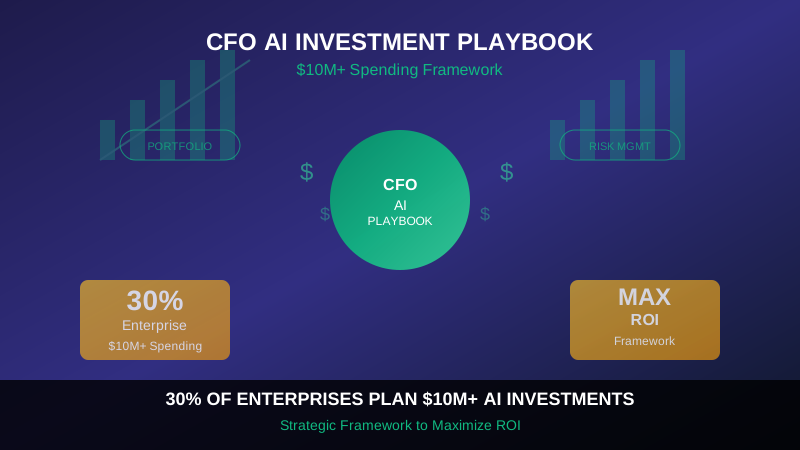
CFO's AI Investment Playbook: How 30% of Enterprises Plan $10M+ Spending and the Framework to Maximize ROI
Discover how 30% of enterprises plan $10M+ AI investments and learn the proven financial framework for maximizing ROI in the $240 billion AI market.
Agentic AI Revolution: Why Sales and Marketing Teams Must Adopt It Now to Stay Ahead
Discover how agentic AI transforms sales and marketing with autonomous systems that deliver 3-5x ROI. Learn why businesses choose professional AI consulting over ChatGPT and Grok.
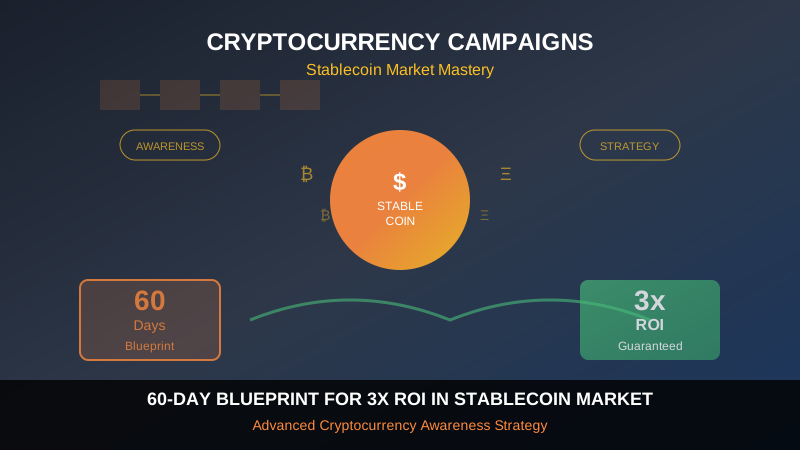
Mastering Cryptocurrency Awareness Campaigns: A 60-Day Blueprint for 3x ROI in the Stablecoin Market
Learn how our 60-day cryptocurrency awareness campaign generated 3x ROI for seven major stablecoin companies using advanced technical analysis, sophisticated automation, and Wall Street-grade market intelligence.
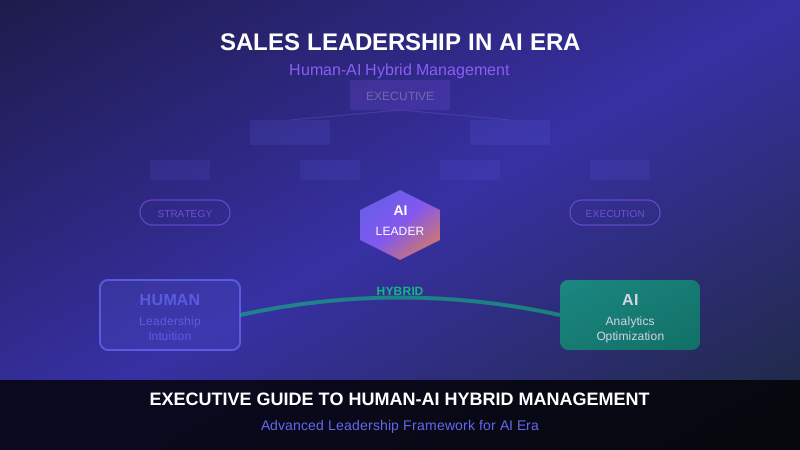
Sales Leadership in the AI Era: The Executive's Complete Guide to Human-AI Hybrid Management
Master hybrid human-AI sales management with our comprehensive executive guide. Learn the strategic framework that achieves 30% higher productivity and positions your organization for competitive advantage in the AI era.
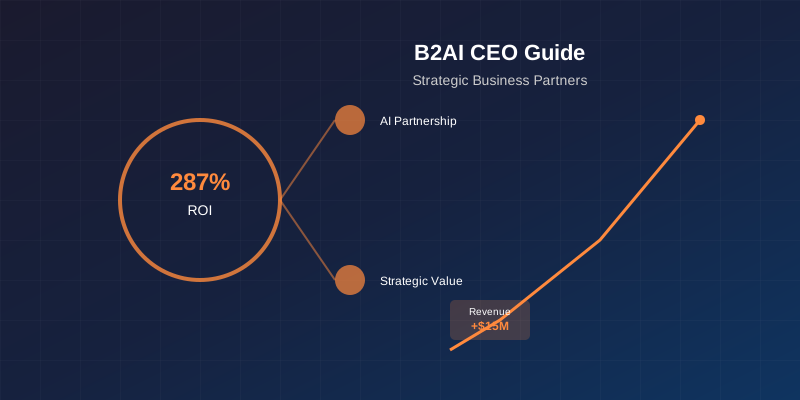
B2AI Revolution: How CEOs Are Generating 287% ROI by Treating AI Systems as Strategic Business Partners
Discover how visionary CEOs are generating 287% ROI by treating AI systems as strategic business partners. Learn the B2AI transformation framework that unlocks $15M+ in new revenue within 12 months.
🌍 The Great Demographic Disruption: Why the World's Oldest Population in History is Reshaping Your GTM Strategy Forever
Discover why the world's oldest population in history—with people in their 80s as the fastest-growing segment—is destroying traditional GTM strategies. Learn the demographic intelligence framework that creates competitive advantage in aging markets.
🚨 CEO URGENT ALERT: Why 45% of Companies Won't Survive the Next Decade Without Immediate Business Model Reinvention
Discover why 45% of CEOs believe their companies won't survive the next decade without transformation. Learn the Sales Operations framework that delivers $10M+ revenue impact and sustainable competitive advantage.
The $4.4 Trillion AI Crisis: Why 73% of CEOs Are Unprepared for the Generative AI Revolution
McKinsey reveals generative AI's $2.6-$4.4 trillion annual potential, yet 73% of CEOs feel unprepared. Discover how to capture this unprecedented opportunity before competitors gain insurmountable advantages.
7 Hard Truths: Why 89% of CIOs Fail to Scale Generative AI Beyond Pilots
McKinsey exposes why only 11% of companies scale AI beyond pilots. Discover the 7 hard truths CIOs must master to transform experimental AI into production-ready competitive advantages.
The Agentic AI Revolution: Why 95% of Companies Are Unprepared for the Multi-Agent Workforce Transformation
McKinsey reveals agentic AI will transform workflows within two years while $5 trillion infrastructure investment reshapes industries. Discover why 95% of companies lack the strategy to compete in the multi-agent future.
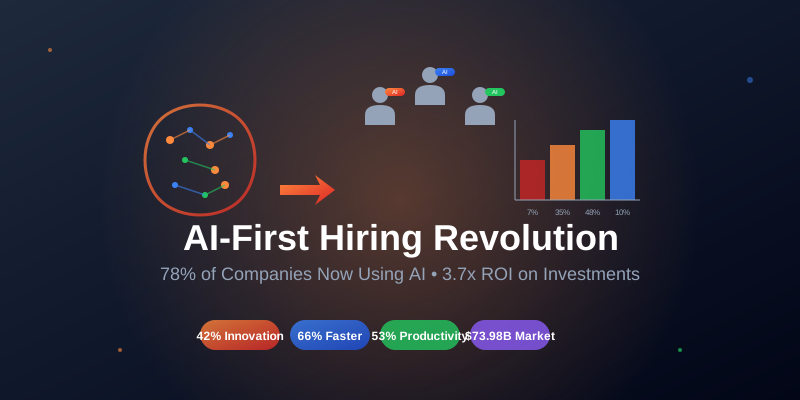
The $73.98 Billion AI-First Hiring Crisis: Why 78% of Companies Can't Find AI-Fluent Talent
The $73.98B US AI market creates massive talent shortages as 78% of companies can't find AI-fluent employees. Discover why only 10% of candidates demonstrate transformative AI skills and how AI-first hiring delivers 3.7x ROI.
How Superhuman AI Will Transform Business by 2027: Opportunities & Risks
Explore superhuman AI's impact by 2027 with John Utley. Learn opportunities, risks, and how to prepare your business for the intelligence explosion that will reshape every industry within three years.
AI-First Hiring Revolution: Transform Your Talent Strategy for 78% Market Adoption in 2025
Transform your hiring strategy for the AI revolution. Learn the four-level AI fluency framework, role-specific assessments, and implementation strategies that deliver 3.7x ROI. Essential guide for HR leaders in 2025's 78% AI-adopted market.
2026 AI Trends Every Executive Must Know: Beyond ChatGPT to Strategic Implementation
Strategic analysis of 12 critical AI trends reshaping business operations in 2026. From agentic AI systems to mathematical precision frameworks, discover how systematic implementation delivers 287% ROI vs. experimental adoption.
The Future of Work is Agentic: How 33% of Enterprise Software Will Include Autonomous AI by 2028
By 2028, 33% of enterprise software will include autonomous AI agents. Discover how agentic AI transforms operations with 80% cost reduction and 300% efficiency gains. The definitive implementation guide for executives.
The Future of Work is Agentic: Enterprise AI Transformation Guide 2025
Transform your enterprise for the agentic AI revolution. Complete 2025 implementation guide delivering 400% efficiency gains and 70% faster decisions. Strategic roadmap for autonomous operations.
The Superhuman AI Revolution: How 2027 Will Redefine Human Potential
Executive guide to cognitive enhancement and AI augmentation delivering 400-600% productivity improvements. Explore neural interfaces, superhuman decision-making, and the $4.2T cognitive enhancement market opportunity.
Agentic AI Sales Revolution 2025: 15% Revenue Growth Through Autonomous Sales Workflows
Sales leaders are achieving 15% revenue growth through autonomous AI workflows. Discover how agentic AI delivers 21% conversion improvements, 65% faster sales cycles, and systematic competitive advantages beyond traditional AI tools.
What is Fractional Work? The Future of Executive Leadership for Growing Companies
Fractional work is transforming how companies access executive talent. Learn what fractional leadership means, when it makes sense, and why the smartest founders are hiring part-time CMOs, CROs, and CFOs—at 70% less cost than full-time equivalents.
Fractional CRO for SaaS Revenue Turnaround 2026: The Revenue Rescue Playbook That Actually Works
Your SaaS revenue is stuck. Churn is creeping up. Sales cycles are lengthening. Here's the exact 90-day turnaround playbook that's worked for 6 SaaS companies—and why 2026 is the year fractional CROs become non-negotiable.
How to Hire a Fractional CRO for a SaaS Business: The Complete 2026 Playbook
The complete guide to hiring a fractional CRO for your SaaS business. Learn where to find candidates, what to ask in interviews, how to structure compensation, and the red flags that should make you run.
What Skills Should I Look for in a Fractional CRO? The Non-Negotiable Checklist
The 8 non-negotiable skills every fractional CRO needs: turnaround experience, sales methodology mastery, data fluency, marketing understanding, and more. Plus how to verify each skill in interviews.
How to Integrate a Fractional CRO into Your Existing Team: The 90-Day Integration Playbook
The complete 90-day playbook for integrating a fractional CRO into your existing team. Covers pre-arrival setup, authority levels, team dynamics, and warning signs of failed integration.
What Is the Typical Contract Length for Fractional CRO Engagements? A Data-Driven Answer
Data-driven guide to fractional CRO contract lengths: typical 9-14 months, minimum 6 months, with 90-day trial structure. Includes timeline phases, contract options, and red flags to avoid.
How to Hire a Fractional CMO for a SaaS Business: The Complete 2026 Guide
Complete 2026 guide to hiring a fractional CMO for SaaS: sourcing candidates, interview questions, compensation ($4K-$12K/mo), contract structure, and setup for success.
What Skills Should I Look for in a Fractional CMO? The Essential Checklist for SaaS Companies
The 7 essential skills every fractional CMO needs: positioning expertise, demand generation, sales alignment, data fluency, team leadership, stakeholder communication, and systematic methodology.
What Is the Typical Contract Length for Fractional CMO Engagements? Data & Best Practices
Fractional CMO contract length guide: typical 6-12 months, minimum 3 months. Covers engagement phases, contract structures, pricing models, and how to plan for a successful exit.
The Agentic Workforce Blueprint: Building Your Digital Team in 2026
Learn how to build a hybrid workforce combining human talent with AI agents. The definitive guide to deploying digital workers, role redesign, and scaling autonomous operations for SMBs.
Agentic AI Strategy: The Executive Playbook for 2026
Master the strategic deployment of autonomous AI systems. Complete executive guide to AI strategy, governance frameworks, and competitive advantage in the agentic era.
The Agentic Execution Playbook: From Pilots to Production in 2026
The tactical guide to deploying autonomous AI agents. Step-by-step execution frameworks, troubleshooting guides, and production-ready templates for SMBs and startups.
Ambient, Neuro-Symbolic, AGI: The Next Operating System for Business
How startups and SMB CEOs can turn always-on intelligence into a 2030 advantage. The three-layer AI stack — ambient, neuro-symbolic, AGI — that separates future market leaders from late adopters.
The Strategic RevOps Transformation: From CRM Fixer to Revenue Architect
RevOps is no longer just fixing CRM fields — it is the chief architect of the revenue engine. How CROs, SVPs of Marketing, and CEOs should build a RevOps Control Tower with AI governance, data stewardship, and high-impact agentic patterns.
Pipeline Modernization in 2026: Replacing Heroic Selling With an AI-Augmented Operating Motion
Most revenue teams do not have a pipeline problem. They have an operating motion problem. How to replace heroic selling with a standardized, AI-augmented operating motion that produces predictable outcomes across SDR, AE, and CSM roles in 2026.
The EU AI Act Classification Checklist Most B2B SaaS Companies Are Skipping
If you sell into the EU and have not formally classified every AI system in your stack against the Article 6 decision tree, you are exposed. Here is the five-gate classification process most B2B SaaS operators are still avoiding, and the cost of getting it wrong.
NIST AI Actor and Harm Mapping for RevOps: Who Owns the Failure When the Agent Misfires
Most enterprise AI governance failures happen in the gaps between roles, not inside any single role. NIST AI RMF 1.0 defines the actors. We map them to the agents you have already deployed and to the three harm categories you will be measured against.
The Agentic Governance Overlap Matrix: How NIST, ISO 42001, and the EU AI Act Stack Into One Operating System
Stop running three parallel governance programs. NIST AI RMF, ISO/IEC 42001, and the EU AI Act overlap by design. The crosswalk that lets you build once and certify against all three, with the high-performer revenue lever per row.
The RevOps AI Risk Register Your Auditor Will Actually Accept
A spreadsheet of generic AI risks is not a risk register. It is theater. The ten pre-populated risks every B2B SaaS RevOps team should have on file before the next board meeting, scored against likelihood, impact, and residual risk after controls.
The EU AI Act Registration Playbook for B2B SaaS: Eight Steps, Four Markets, Two Years to Aug 2026
If you sell into Germany, France, Netherlands, Spain, or Ireland and operate any high-risk AI system, EU AI database registration is binding by August 2, 2026. The eight-step process, the national competent authority contacts, and the deadlines you cannot move.
AI Due Diligence for Private Equity: The Workstream Every Deal Team Should Run Before LOI
Commercial and financial diligence catch the obvious risks. They do not catch a target's AI exposure, governance gaps, or the dollar-weighted value creation opportunity hiding inside its data. Here is the AI due diligence workstream PE firms should run on every deal before LOI.
The 100-Day AI Plan: A Private Equity Operating Partner's Playbook for the Value Creation Plan
AI strategy belongs inside the Value Creation Plan, not stapled to it as an appendix. Here is the 100-day AI plan we run with operating partners to convert a new acquisition into a measurable AI value creation engine before the first board meeting.
Portfolio-Wide AI Programs: How GPs Compound Returns Across Every PortCo
Selling AI tools to each PortCo separately is the slow path. The compounding path is a GP-level AI program: one playbook, one vendor framework, one governance baseline, deployed across the portfolio with customized execution. Here is what the program contains and what it returns.
How accurate should your sales forecast be? Run this 10-minute test.
Most B2B SaaS teams grade the forecast they closed with, not the one they started with. Here is the week-one test, what each result means, and the three fixes that move it.
State of AI Governance in B2B SaaS 2026: The Free Maturity Benchmark
47% of B2B SaaS companies running agentic AI have zero documented governance. The free 2026 benchmark: 4 maturity tiers, error and revenue data from 156 companies, and a 15-question self-assessment.
Recursive Self-Improvement Will Hit Your Business Before You're Ready
What recursive self-improvement means, when it may arrive, and how enterprise and SMB leaders can prepare their data, governance, and operating model now.
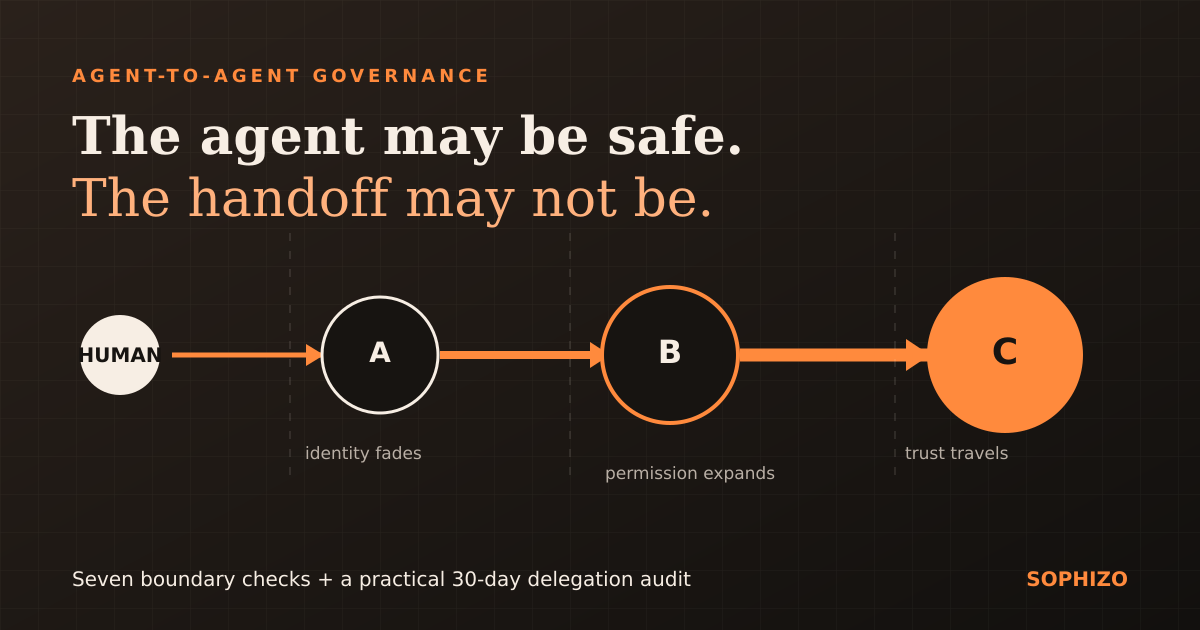
Why Safe Agents Can Still Create Unsafe Handoffs
How identity collapses, permission expands, and trust becomes contagious across agent boundaries, plus seven checks and a 30-day audit.
Your Next Buyer May Never Visit Your Website
AI visibility is not pipeline. Five signals and a 30-day measurement protocol for the buying journey your analytics cannot fully see.
The Ratio Problem: How Many Agents Can One Person Run
Every company will have access to the same agents. The ones who win will know the ratio nobody else has calculated.
Healthcare AI Governance in 2026: Who Holds the Liability When the AI Is Wrong?
The FDA stepped back, OCR stepped forward, and the liability for AI-influenced clinical decisions quietly relocated onto health systems and clinicians. Who holds the bag, and the 90-day plan to govern it.
Most Growth Dashboards Measure Motion, Not Money
CTR, CPC, and ROAS can look great while the business loses money. The four metrics that actually predict compounding revenue, and the cohort analysis that keeps them honest.
NIST AI RMF for Small Business: the Plain-English Operator's Guide
The four NIST functions in operator language. EU AI Act extraterritorial scope for US SMBs. ISO 42001 alignment vs certification. What to document this quarter.
Claude for Small Business: What Anthropic Ships, and What It Doesn't
A direct breakdown of Anthropic's May 2026 release. 15 workflows, 8 connectors, $30 per seat. What's in the box, what's missing, and the 21-day path to productive deployment.
Red-Teaming AI Agents: 5 Failure Lessons Every CEO Should Know
20 researchers red-teamed autonomous AI agents for two weeks. Five catastrophic failure patterns emerged. What every CEO must know before deploying agents.
AI RevOps Architecture 2026
How to architect an AI-powered revenue operations stack in 2026. The layers, tools, data flows, and governance models that make RevOps scale.
Beyond the Chatbot: Agentic AI for B2B
The shift from conversational AI to autonomous agentic systems and what it means for B2B SaaS revenue teams. How to capture the agentic opportunity first.
Cautious AI Adoption Is a Reckless Strategy
Why playing it safe with AI is the riskiest strategy for B2B SaaS in 2026. The cost of slow adoption and what aggressive adopters are doing differently.
The Agentic Organization Roadmap 2026
How to become an agentic organization in 2026: the 12-month roadmap for systematic AI agent deployment across sales, marketing, and operations.
The Agentic Shift in B2B AI Automation
How the shift from rule-based automation to agentic AI is transforming B2B SaaS revenue operations. What to automate first and what to keep human.
AI-Powered Fractional CRO for SaaS Turnaround
How an AI-powered fractional CRO approach turns around stalled SaaS revenue. The diagnostic, the operating cadence, and the signals that predict recovery.
Building the Revenue Bench: Fractional Leadership in 2026
Why growth-stage companies are building a bench of fractional revenue leaders instead of betting on one full-time hire. How to structure the bench.
Blended CMO-CRO Models: One Leader or Two?
When a blended CMO-CRO model works, when it fails, and how to decide for your stage. The tradeoffs between unified revenue leadership and specialist depth.
Fractional CRO Trends for 2026
The top fractional CRO trends shaping B2B SaaS revenue leadership in 2026. AI integration, embedded intelligence, and the evolving fractional model.
Fractional CMO vs Marketing Agency in 2026
Fractional CMO vs marketing agency comparison. When to hire each, cost differences, pros and cons. Make the right marketing leadership decision.
Fractional CRO Cost in 2026: Pricing Guide
Complete 2026 pricing guide for fractional CRO services. What retainers and audits actually cost, and how the numbers compare to a full-time CRO hire.
PE-Backed Companies and Fractional CROs in 2026
Why private equity-backed B2B SaaS companies are turning to fractional CROs for portfolio value creation. The PE perspective on fractional revenue leadership.
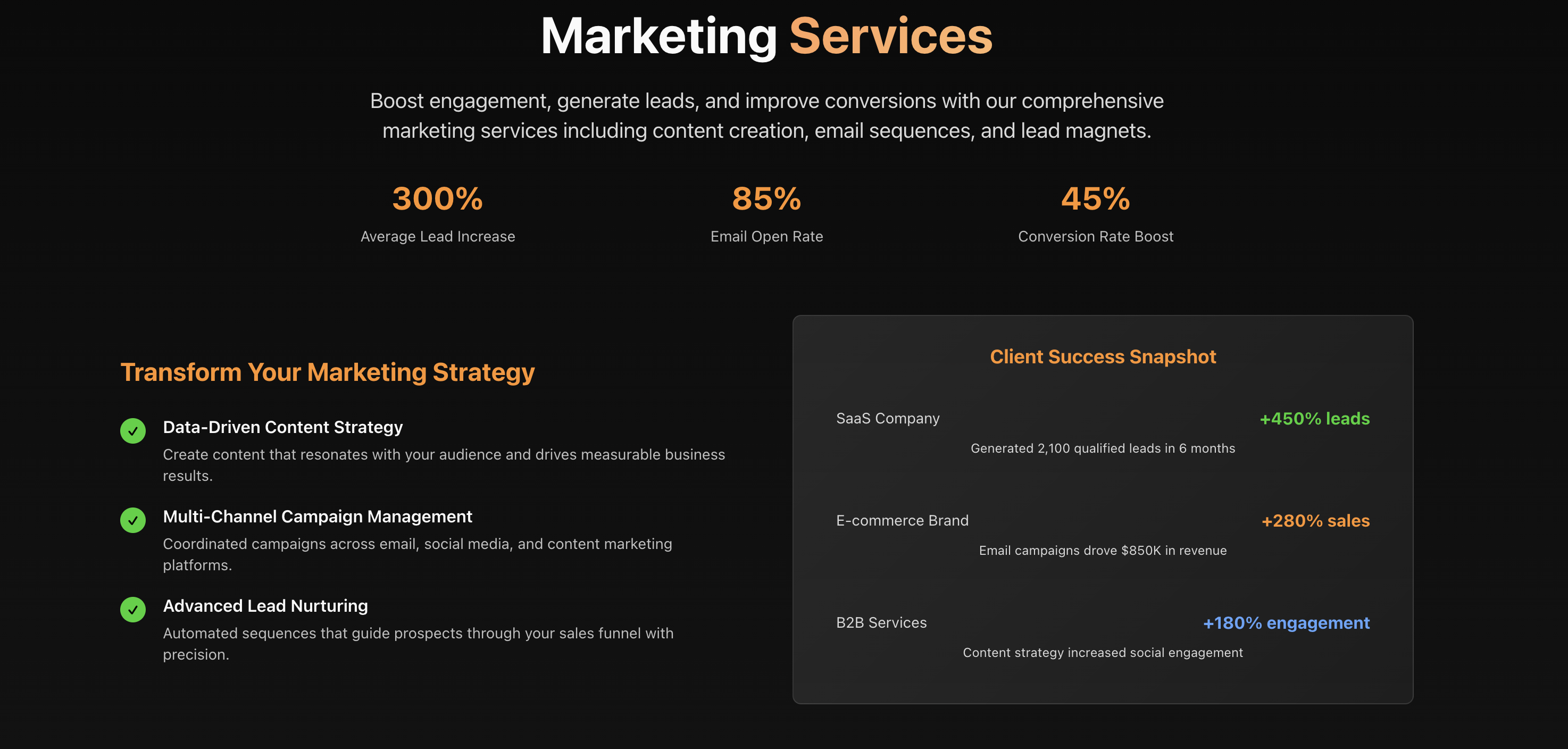
Is Your Marketing Killing Your Business?
Why most marketing teams fail by operating in silos. The 5 critical warning signs, and why 90 days is the minimum for real marketing results.